
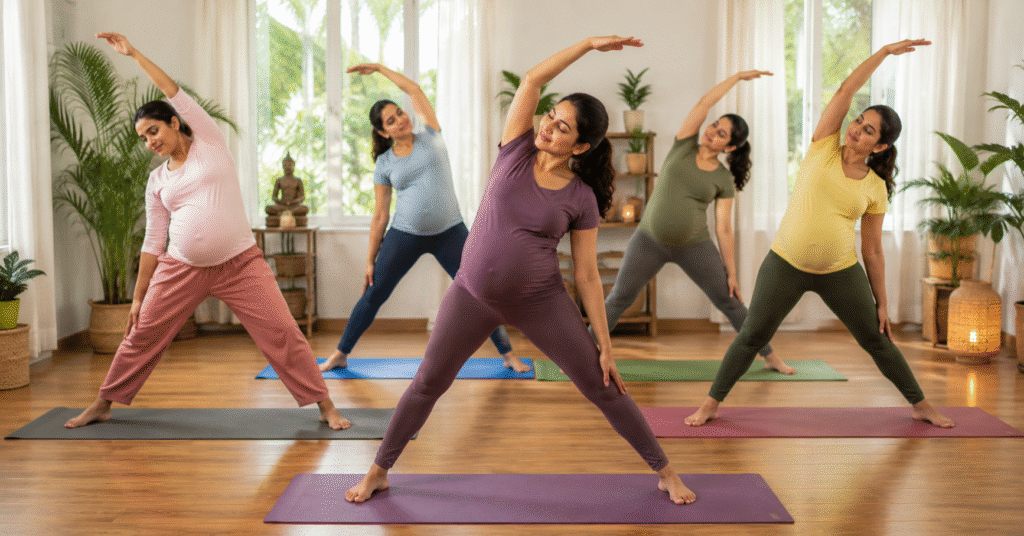
Pregnancy brings many physical and hormonal changes, and constipation is one of the most common digestive issues expectant mothers experience. Rising progesterone levels slow down digestion, while the growing uterus can put pressure on the intestines, making bowel movements less frequent and uncomfortable. Although dietary changes, hydration, and regular movement play an important role, pregnancy yoga can also be a safe and effective way to support healthy digestion and ease constipation.
Gentle prenatal yoga poses help stimulate the digestive system, improve blood circulation, reduce bloating, and encourage natural bowel movements without putting unnecessary strain on your body. Combined with mindful breathing, these exercises can also reduce stress, which is another factor that can affect digestive health during pregnancy.
Why Is Constipation Common During Pregnancy?
Constipation is one of the most common digestive problems during pregnancy, affecting many women at different stages of their pregnancy. It occurs when bowel movements become less frequent, stools become hard, or passing stool becomes difficult. Several natural changes in the body contribute to this condition.
Hormonal Changes
During pregnancy, your body produces higher levels of the hormone progesterone. This hormone helps relax the muscles of the uterus to support your growing baby, but it also relaxes the muscles in the digestive tract. As a result, food moves more slowly through the intestines, allowing more water to be absorbed from the stool, which can make it hard and difficult to pass.
Growing Uterus
As your baby grows, the uterus expands and places increasing pressure on the intestines and rectum. This added pressure can slow the movement of waste through the digestive system, making constipation more likely, especially during the second and third trimesters.
Iron Supplements
Many pregnant women are prescribed iron supplements to support healthy red blood cell production and prevent anaemia. While these supplements are important, they can also contribute to constipation in some women by making stools firmer and slowing bowel movements.
Changes in Diet and Activity
Morning sickness, food aversions, and changes in appetite may reduce your intake of fibre-rich foods such as fruits, vegetables, and whole grains. At the same time, fatigue or physical discomfort may lead to reduced physical activity. Both factors can slow digestion and increase the risk of constipation.
Dehydration
Pregnancy increases your body’s need for fluids. If you do not drink enough water, your body absorbs more moisture from the intestines, leaving stools dry and harder to pass.
Which Pregnancy Yoga Poses Are Safe for Constipation Relief?
Cat-Cow Pose (Marjaryasana-Bitilasana)
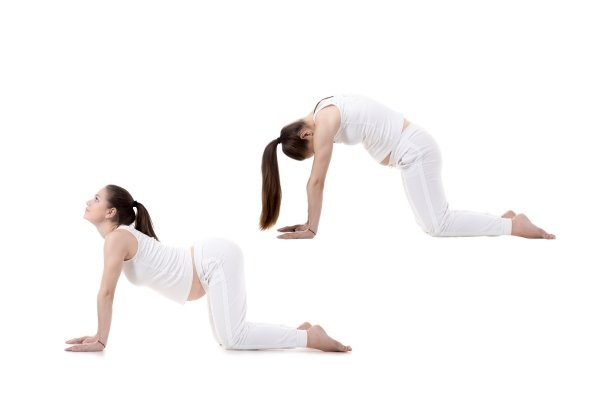
The Cat-Cow Pose is one of the safest and most effective yoga poses during pregnancy. It gently stretches the spine and massages the abdominal organs, helping to stimulate digestion and relieve bloating.
How to Do It
- Start on your hands and knees with your wrists directly under your shoulders and your knees under your hips.
- Inhale as you lift your head and tailbone, allowing your belly to move gently downward (Cow Pose).
- Exhale as you tuck your chin towards your chest and gently round your back (Cat Pose).
- Continue moving slowly between Cat and Cow, matching each movement with your breath.
- Repeat for 8–10 slow breaths, then return to a neutral spine.
Child’s Pose (Balasana – Wide-Knee Variation)
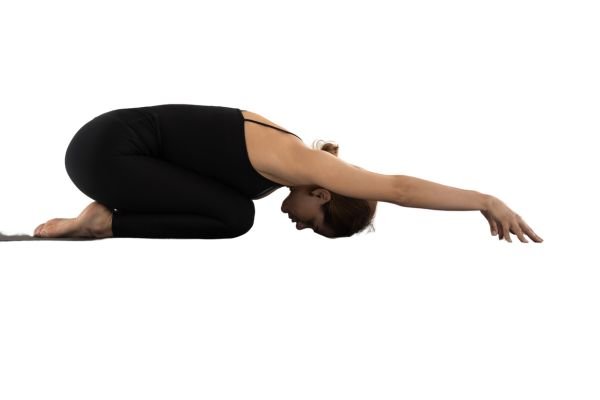
A wide-knee Child’s Pose provides a gentle stretch for the lower back and pelvic area while allowing space for your growing belly. It also promotes relaxation, which can support healthy digestion.
How to Do It
- Kneel on the mat and spread your knees wider than hip-width to make room for your baby bump.
- Bring your big toes together and slowly sit your hips back towards your heels.
- Stretch your arms forward with your palms resting on the mat.
- Rest your forehead on the mat or place a yoga block or cushion beneath it for support.
- Breathe deeply and hold the pose for 30–60 seconds before slowly sitting back up.
Garland Pose (Supported Malasana)
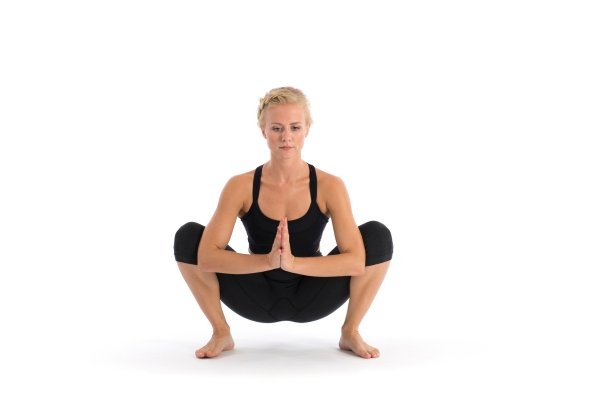
A supported squat helps encourage bowel movements by gently opening the pelvic floor and improving the natural alignment of the digestive tract. Use yoga blocks or a chair for support if needed.
How to Do It
- Stand with your feet slightly wider than shoulder-width apart and toes pointing out comfortably.
- Slowly bend your knees and lower into a gentle squat, keeping your heels on the floor if possible.
- Place your hands together at your chest or hold a chair or yoga block for support.
- Keep your chest lifted and your spine straight while breathing slowly.
- Hold for 20–30 seconds, then press through your feet to slowly stand back up.
Bound Angle Pose (Baddha Konasana)
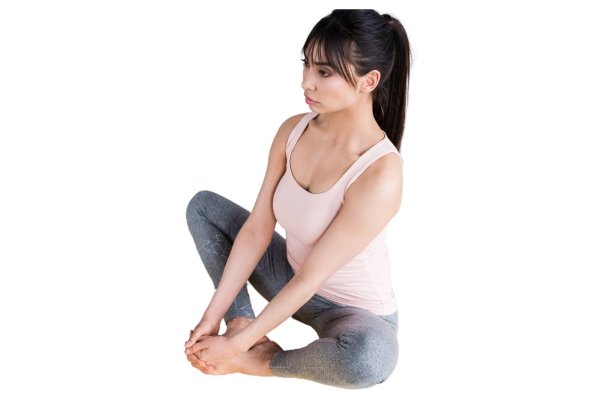
This gentle seated pose improves blood flow to the pelvic region and supports digestive health while stretching the inner thighs and hips.
How to Do It
- Sit comfortably on the floor or on a folded blanket with your back straight.
- Bring the soles of your feet together and allow your knees to fall gently out to the sides.
- Hold your feet or ankles while keeping your shoulders relaxed.
- Sit tall and take slow, deep breaths without pressing your knees downward.
- Stay in the pose for 1–2 minutes, then gently straighten your legs.
Seated Side Stretch
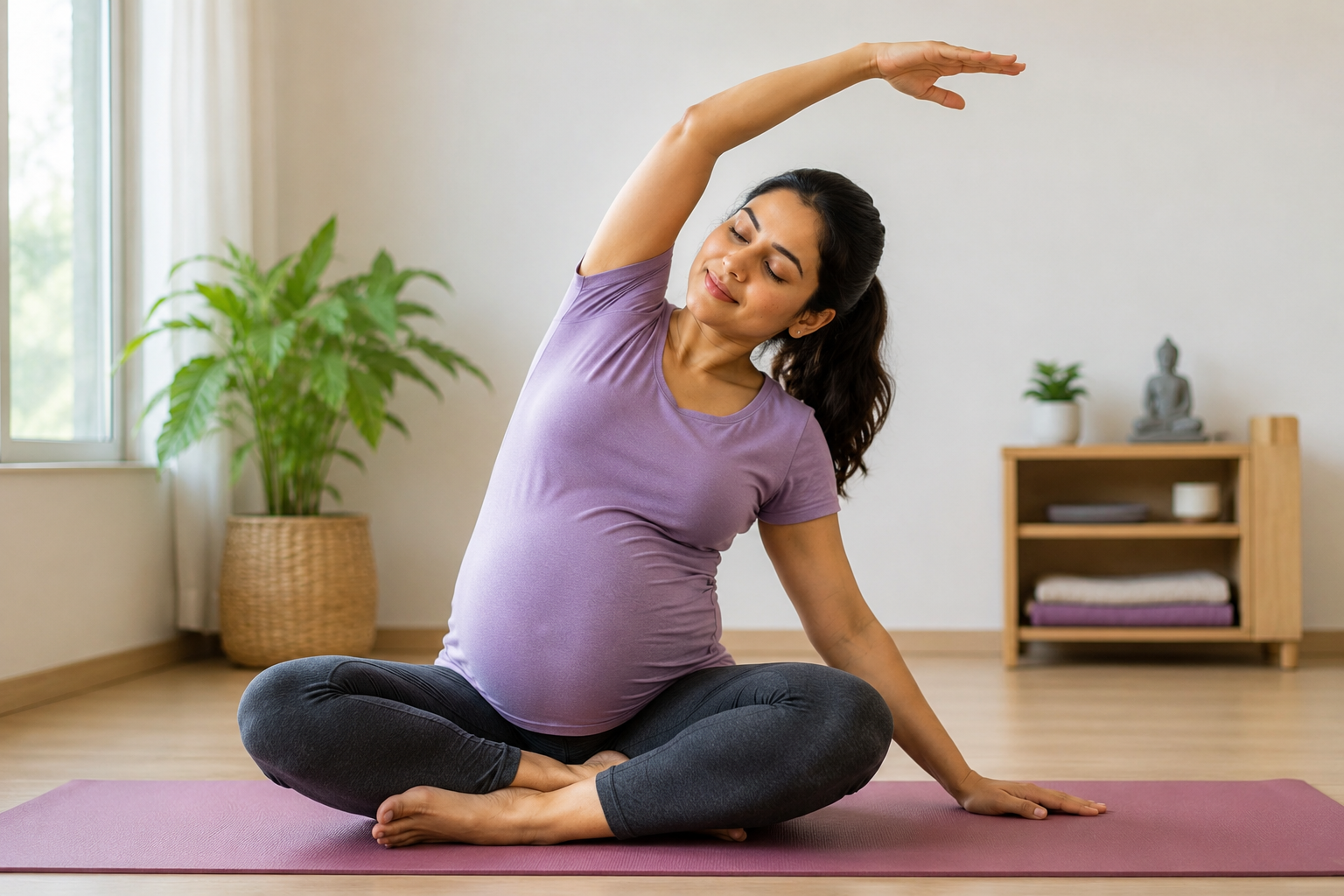
A gentle side stretch creates space around the abdomen, improves circulation, and encourages healthy movement within the digestive organs without compressing the belly.
How to Do It
- Sit comfortably on the floor with your legs crossed or on a cushion for extra support.
- Place one hand on the floor beside you for balance.
- Raise your opposite arm overhead and lengthen your spine.
- Slowly bend towards the supporting hand, feeling a gentle stretch along the side of your body.
- Hold for 20–30 seconds while breathing deeply, then repeat on the opposite side.
Final Thoughts on Pregnancy Yoga for Constipation Relief
Pregnancy yoga offers a gentle and natural way to relieve constipation by improving digestion, reducing bloating, and encouraging regular bowel movements. When combined with a fibre-rich diet, proper hydration, and light physical activity, it can help you feel more comfortable throughout your pregnancy. Always practise under the guidance of a qualified prenatal yoga instructor and consult your healthcare provider before starting any new exercise routine to ensure the safety of both you and your baby.
At Body & Mind Yogi, our expert-led prenatal yoga classes in Dubai are designed to help expecting mothers stay active, reduce pregnancy discomfort, and prepare for a healthier, more confident pregnancy journey. Join us to experience safe, guided yoga practices that support both you and your growing baby.

