Pregnancy brings physical and emotional changes, making it important to find safe ways to stay active and relaxed. Prenatal yoga is a gentle form of exercise that combines pregnancy-appropriate movements, breathing techniques, and relaxation to support overall well-being. But when should you start prenatal yoga during pregnancy?
You may be able to start prenatal yoga during the first trimester, provided your healthcare provider confirms that exercise is appropriate for you. Some women prefer to begin during the second trimester when early pregnancy symptoms improve. The right time depends on your health, pregnancy progress, previous exercise experience, and medical advice.
When Is the Best Time to Start Prenatal Yoga?
There is no single best time to start prenatal yoga for every pregnant woman. Some women can practise gentle, pregnancy-appropriate yoga early in pregnancy, while others may need to wait because of nausea, fatigue, medical conditions, or other concerns.
If you are new to yoga, speak with your doctor or midwife before starting. A qualified prenatal yoga instructor can then help you choose appropriate movements and modify the practice as your pregnancy progresses.
Here is a general overview of prenatal yoga across the three trimesters:
- First trimester (weeks 1–12): Gentle yoga may be suitable for some women after medical guidance.
- Second trimester (weeks 13–27): Many women find this a comfortable time to begin because early pregnancy symptoms may improve.
- Third trimester (week 28 until birth): Gentle, supported movements and relaxation may help maintain mobility and comfort.
Your individual circumstances matter more than following a particular timeline. Choose a practice that suits your energy levels and current stage of pregnancy.
Is It Safe to Start Prenatal Yoga in the First Trimester?
The first trimester involves significant changes as your body adjusts to pregnancy. You may experience nausea, tiredness, breast tenderness, or changes in energy levels.
For women with uncomplicated pregnancies, appropriate physical activity is generally encouraged. However, whether you should begin prenatal yoga during the first trimester depends on your health and your healthcare provider’s advice.
What Can You Practise?
If you receive medical clearance, a qualified instructor may recommend gentle activities such as:
- Comfortable breathing exercises without holding your breath.
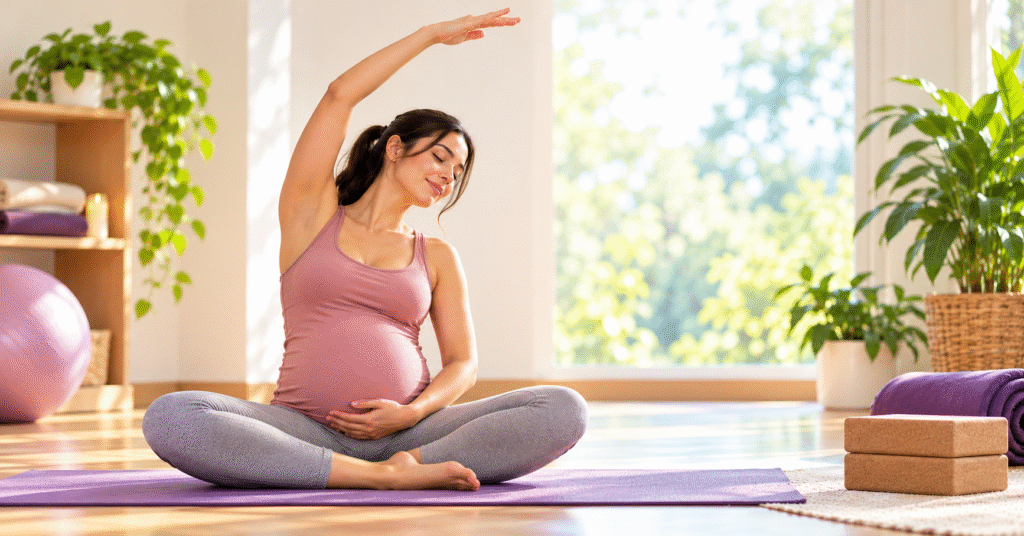
- Gentle seated movements.
- Relaxation and mindfulness.
- Mild stretches that do not cause discomfort.
Avoid strenuous routines, hot yoga, overheating, and poses that create excessive pressure or discomfort. Do not push yourself to maintain your usual exercise intensity if your energy levels have changed.
If you experience significant pain, vaginal bleeding, dizziness, or other concerning symptoms, stop exercising and seek medical advice.
Why Do Many Women Start Prenatal Yoga in the Second Trimester?
The second trimester is often a comfortable time to begin prenatal yoga, particularly for beginners. For many women, nausea and fatigue improve, while energy levels become more manageable.
As your body changes, gentle movement and relaxation can help you develop a routine that supports your physical and emotional well-being.
Benefits of Starting in the Second Trimester
Improved flexibility and mobility: Pregnancy-appropriate stretches may help maintain comfortable movement as your body changes.
Better posture awareness: Gentle yoga can help you become more aware of your posture as your weight distribution changes.
Relaxation and stress management: Breathing exercises and guided relaxation may help you manage everyday stress and feel calmer.
Greater body awareness: Yoga encourages you to notice your comfort levels and adjust movements according to your needs.
Preparation for later pregnancy: Learning comfortable breathing and relaxation techniques can provide useful skills for the later stages of pregnancy.
If you are new to yoga, start with a beginner-friendly prenatal class rather than a regular yoga session that may include unsuitable poses.
Can You Start Prenatal Yoga in the Third Trimester?
Yes, some women can begin gentle prenatal yoga during the third trimester, provided their healthcare provider confirms that it is appropriate.
During this stage, your growing abdomen may affect your balance, mobility, and comfort. You may also experience back discomfort, tiredness, or difficulty finding a comfortable position.
A prenatal yoga instructor can adapt the practice to accommodate these changes.
Suitable Activities During the Third Trimester
Depending on your health and comfort, your instructor may suggest:
- Gentle seated stretches.
- Supported standing movements.
- Comfortable breathing exercises.
- Gentle pelvic mobility movements.
- Guided relaxation in a comfortable position.
Use cushions, chairs, or other suitable props for support. Avoid positions that compromise your balance, put pressure on your abdomen, or make you uncomfortable.
The goal is to maintain gentle movement and relaxation rather than increase flexibility or achieve challenging poses.
What Are the Benefits of Prenatal Yoga During Pregnancy?
Prenatal yoga offers a combination of gentle physical activity, breathing awareness, and relaxation. When practised appropriately, it can support several aspects of pregnancy well-being.
Supports Physical Comfort
Gentle movement may help maintain mobility and reduce feelings of stiffness. Pregnancy-specific modifications can make it easier to move comfortably as your body changes.
Encourages Better Posture
As your abdomen grows, your posture and centre of gravity may change. Appropriate yoga movements can help improve body awareness and encourage comfortable positioning.
Helps Manage Stress
Pregnancy can bring excitement alongside uncertainty and emotional changes. Mindful breathing and relaxation may help you manage everyday stress and feel more settled.
Promotes Mindful Breathing
Prenatal yoga introduces breathing techniques that encourage calm, controlled breathing. These skills may also help you feel more confident when practising relaxation during pregnancy.
Encourages Social Connection
Attending prenatal yoga classes gives you an opportunity to meet other expectant mothers and share experiences in a supportive environment.
How to Start Prenatal Yoga Safely
Before beginning prenatal yoga, take a few precautions to make your practice more comfortable and appropriate.
Consult Your Healthcare Provider
Discuss your plans with your doctor or midwife, especially if you have pregnancy complications, a history of preterm labour, vaginal bleeding, or another condition that may affect exercise safety.
Choose a Qualified Prenatal Yoga Instructor
Look for an instructor with specific training in prenatal yoga. They should understand how pregnancy affects balance, flexibility, positioning, and exercise tolerance.
Start Slowly
If you are new to yoga, begin with a gentle, manageable session. Increase the duration or frequency only when appropriate for your health and comfort.
Stay Hydrated
Drink water and avoid exercising in excessively hot or poorly ventilated environments. Hot yoga is not recommended during pregnancy because of the risk of overheating.
Listen to Your Body
Pregnancy is not the time to force difficult stretches or compete with other participants. Modify or skip any movement that causes discomfort.
Know When to Stop
Stop exercising and seek medical advice if you experience vaginal bleeding, fluid leakage, chest pain, dizziness, contractions, or unusual shortness of breath. Severe symptoms require urgent medical assessment.
Find the Right Time to Begin Prenatal Yoga
The best time to start prenatal yoga depends on your pregnancy stage, health, comfort, and previous exercise experience. Some women can begin with gentle movements during the first trimester, while others may find the second trimester a more comfortable starting point. Even during the third trimester, appropriately modified prenatal yoga may be an option for some women.
Before starting, consult your healthcare provider and choose a qualified prenatal yoga instructor who can adapt the practice to your needs. With appropriate guidance, gentle movement, mindful breathing, and relaxation can become valuable parts of your pregnancy wellness routine.
At Body & Mind Yogi, our expert-led prenatal yoga classes in Dubai are designed to help expecting mothers stay active, reduce pregnancy discomfort, and prepare for a healthier, more confident pregnancy journey. Join us to experience safe, guided yoga practices that support both you and your growing baby.

